





































Fast Forward 2005
 Hey, now this is damn cool. Fast Company’s November
issue contained their
top
100 “people, ideas, and trends that
will change how we work and live in 2005.” Coming in at number 8 is
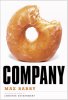
“Max Barry’s Company”!
Hey, now this is damn cool. Fast Company’s November
issue contained their
top
100 “people, ideas, and trends that
will change how we work and live in 2005.” Coming in at number 8 is
“Max Barry’s Company”!
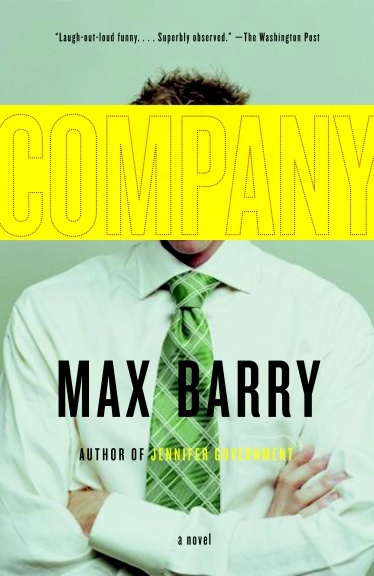
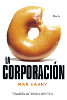
What it is: A satiric novel due out next fall featuring a company “so huge that nobody who works for it knows what it actually does.” Stir into motion the angle-players, bureaucrats, and suck-ups after merciless layoffs. Let the follies begin.
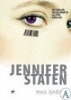
Our Take: Barry’s cult novels Syrup and Jennifer Government established him as a gifted business satirist. Expect more informed viciousness about the hierarchies we endure.
I guess now I should stop editing the thing so it can actually be published, hey? (Just a little longer. Just a liiiiiitle longer.)
 18 comments
Once more into the breach
A little
earlier
I asked the question: “Is it a good idea to sell a book to a publisher,
then extensively re-write it?” That’s what I somehow ended up doing
to my new novel, Company. I sent off the new, much-altered draft
to my editor, Bill, and waited to see whether he thought it was an
improvement or I had made a big mistake.
The answer, it turns out, is both. Bill likes my rewrite and says: “More!” In particular, he wants me to fix a major plot-line that centers around people in this company being unable to remember anything about the world outside it. This concept is slightly surreal, I know, but I liked it so much that I hammered away until it made a vague kind of sense. Alas, Bill observes that it isn’t quite a specific enough kind of sense, and now that I’ve jazzed up everything else, this stands out. Since I am so happy to rewrite big chunks of the book, he says, how about I throw out that whole memory-loss idea and put in something better?
At this point I have two competing thoughts. One is, “God damn you, Bill, you’ll publish this book and you’ll like it!” The other is, “Aaarrrgghhh, he’s right.”
When editing a novel, it’s often hard to know when to stop. There’s no clear point at which you think, “That’s it, this book cannot be improved any more.” There’s always more you can do. If you want to be published in your own lifetime (or write more than one book), though, you have to stop editing at some point, but that is not, alas, a quiet, satisfying moment of realization that everything is just exactly right. For me, at least, it’s guilty and furtive. It’s thinking, “If I have to rewrite one more sentence of this thing, I’m going to vomit.”
I enjoy editing; I love watching something I’ve written improve. But, boy, when you’ve spent every day for the last two years immersed in the same story, you start to hate everybody in it.
And it doesn’t get any better when the book is published. I can’t stand to pick up my published novels because I can barely read a page without wishing I’d done something differently. (This makes book tours interesting.) So that’s how it is: I rewrite a novel until the mere thought of it engages my gag reflex, then I spend the rest of my life wishing I’d spent more time on it.
I’m going to rewrite Company again, because I think Bill is right: it will be better without the memory loss thing. I’ve had a month away from it, which is helpful. And above all else I want to do everything I can to make this novel as good as it can be, and should be.
Then one day, I know, maybe a year or two from now, I will crack open the cover, read a sentence at random, and think, “Damn. I should have done that differently.”
Company re-organization
Is it a good idea to sell a book to a publisher, then extensively
re-write it? The marketer in me says, “No.” (Also, “Put pop-up
ads on NationStates!”) But that’s pretty much what I’ve done
with Company. At first I was just going to do a little
tweaking: snip a sub-plot here, pat down a character foible there,
that kind of thing. But the more I re-wrote, the more I saw that
needed re-writing. Then, before I knew it, I had a new second half
to the book.
(Of course, when I say, “before I knew it,” I’m using artistic license. No-one actually ends up with a novel “before they knew it.” I’m always seeing this in movies: someone decides to write a novel and two weeks later they’re typing THE END into a laptop at Starbucks and exhaling in satisfaction. Two weeks! I can’t get a sentence right in two weeks. Also, I hate people who write novels at Starbucks. And people who exhale in satisfaction in public; them too. So you can see why this annoys me.)
This is something of an addiction of mine; I’m always throwing out the last half of novels and trying again. I never intend it; I just get obsessed with improving things. This is not necessarily a bad thing, if you ignore the fact that I’m spending enormous chunks of time writing bits of novels only to cut them later (which I try to). But now I’ve done it to a book a publisher has already bought, and, presumably, thought was pretty good.
So I’ve confessed to Bill, my editor. As I e-mailed in the new draft, I put the question to him: am I a hard-working, committed author, or just some kind of idiot? He replied:
It depends on what you’ve done. If it’s turned into a searing portrait of the artistic struggles of male ballet dancers, I shall not be pleased.
He’s reading the draft now. There are no ballet dancers. But I’ll have to wait and see what he thinks.
It’s a neeeeeeew novel
I don’t talk about books I’m working on.
This is because I once posted a diary on this site about a book
I was working on, Girl Makes Headlines, and it
turned out to be a baaaaaad novel, very bad, and when it became
clear that I shouldn’t even attempt to get it published, I had to
quickly pretend it never existed. Talking about future books, I realized,
is begging the publishing gods to smite you down.
So now I don’t do it.
Until, that is, I sell them to a publisher. And that’s what’s just happened: Doubleday has ponied up for Company. It will be published in hardcover sometime next year.
I wasn’t sure exactly what I should say about the book at this stage, but fortunately I received an e-mail from a guy called Luke who is very sure what he wanted to know. Luke has 18 questions for me. They start out about my novels, then get into NationStates territory, so I’ll just take the first ten.
1. Is “Company” going to be unique and insightful like the first two books, or is it going to be meant solely to be painfully funny to people in offices, sort of like a Dilbert in writing?
I’m not sure those things are mutually exclusive. I love Dilbert. I’d be very happy if people thought I had written the Dilbert of novels. But I think you’ll find Company to be very recognizably a Max Barry book. I haven’t changed much since I wrote Jennifer Government.
2. Have you finished it and your publishers are just making us wait, or are you still working on it?
I’ve finished the latest draft. My editor is writing up his thoughts on what I should do for the next draft, which, if all goes well, will then be pretty close to the published version. This editing process will probably go for two or three months. The rest of the time is the publisher fooling around with cover designs, sucking up to bookstores, and trying to arrange all the fiddly little die stamp letters in the printing press into the right order.
3. Do you plan on writing more books afterwards?
Yes.
4. If so will they be coming out more or less frequently than your first books?
It depends. It was three and a half years between Syrup and Jennifer Government, and will be roughly two years between Jennifer Government and Company. I’d like to have books published more regularly than that, but only good books. I’m not sure how long I’ll take to write my next good one.
5. If answer to #3 is yes you expect your quality of writing to increase or decrease?
I expect my writing quality to increase as I get more experienced, then taper off sharply once I get rich and famous, descend into a incoherent lifestyle of drunken debauchery, and start pulling out old, rejected manuscripts to meet publishing deadlines. You’ll know this has happened when you see Girl Makes Headlines on the shelves.
6. How many books do you think that you could write before runing out of original ideas?
Forty-two. No, actually, that’s a fair question. John Grisham has just published his—what—17th legal thriller? And apparently it’s good. I really don’t know how you find anything new to say in your 17th genre novel. But I’m only up to book three. I have plenty more stories.
7. Will you be doing any more IRC sessions do you think?
Yes.
8. Will you be doing any more book tours?
If the publishing gods smile, yes.
9. If you will, do you think that you could persuade your demographically blind publishers to make a few more east coast stops?
I can ask them. I may not be able to persuade them. How this works (I think) is that the publisher lets bookstores know that they’ve got a particular author on tour soon, and any stores that want to host him/her put up their hands. So the best way of getting me to tour your city may be to find the bookstore that does the most author events near you and say, “Me and all my friends want you to host Max Barry.”
10. What about Western Massachusetts? I think if you could publicize it, our being a large chunk of land out of touch with reality would cause a book tour to be very succesful. ;p
I tell you what, I’ll mention it on my web site.